Turning a CAD model into a production-ready aluminum casting involves far more than building a pattern and pouring metal. Before production, the casting moves through design for manufacturability, tooling and process development, simulation, patternmaking, molding and pouring, finishing, machining (when required), and first-article inspection.
Each stage builds on the one before it. Casting design affects tooling; tooling influences molding, gating, feeding, and solidification; and those decisions ultimately affect dimensional consistency, machining, quality, and repeatability.
At Cast Products Inc. (CPI), this entire development process happens under one roof – engineering, foundry sciences, our pattern shop, foundry operations, finishing, CNC machining, and quality work together from the initial customer design through first article and production.
Rather than handing a project from one supplier to another, the same team can evaluate, adjust, and document the process as the casting develops. Here’s what that looks like, from the first CAD model to an approved first article.
Design for Manufacturability: Where Most Cost Problems Actually Start
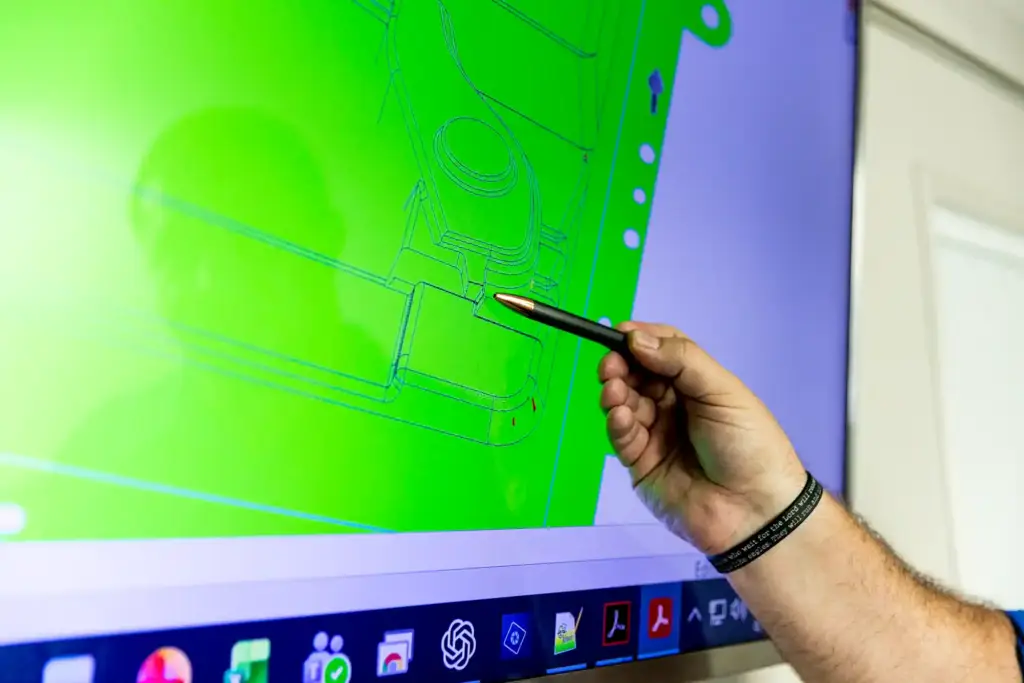
Every new casting begins with a Design for Manufacturability (DFM) review. CPI engineering evaluates the customer’s CAD model and print for wall thickness, draft, parting lines, core requirements, tolerances, machining stock, and other features that affect how the part will mold, pour, finish, and machine.
This process often leads to recommended changes to the customer’s CAD model, with CPI and the customer working together to establish a casting design that meets the part requirements while supporting repeatable production.
From there, we evaluate the tooling and manufacturing approach, including pattern and core-box design, gating and feeding, fixturing, machining, finishing, and other secondary operations. CPI then provides a complete quotation covering unit price, tooling and fixturing costs, secondary processes, and lead time, built around how the casting will actually be manufactured.
Quoting the Program: Why the Review Behind the Number Matters
A casting quote should reflect how the part will actually be manufactured, not simply its weight and geometry. By the time CPI quotes a new program, engineering has reviewed the casting for manufacturability and evaluated the expected tooling, cores, gating and feeding, fixturing, machining, finishing, and other secondary-process requirements.
That work allows us to build the quote around the complete manufacturing process. The customer receives unit pricing along with applicable pattern, core-box, and fixturing costs, secondary-process requirements, and expected lead times.
The goal is to establish the manufacturing approach and the costs associated with it before tooling is built and the casting moves into first article development.
Pattern and Tooling Design: Built for the Life of the Program
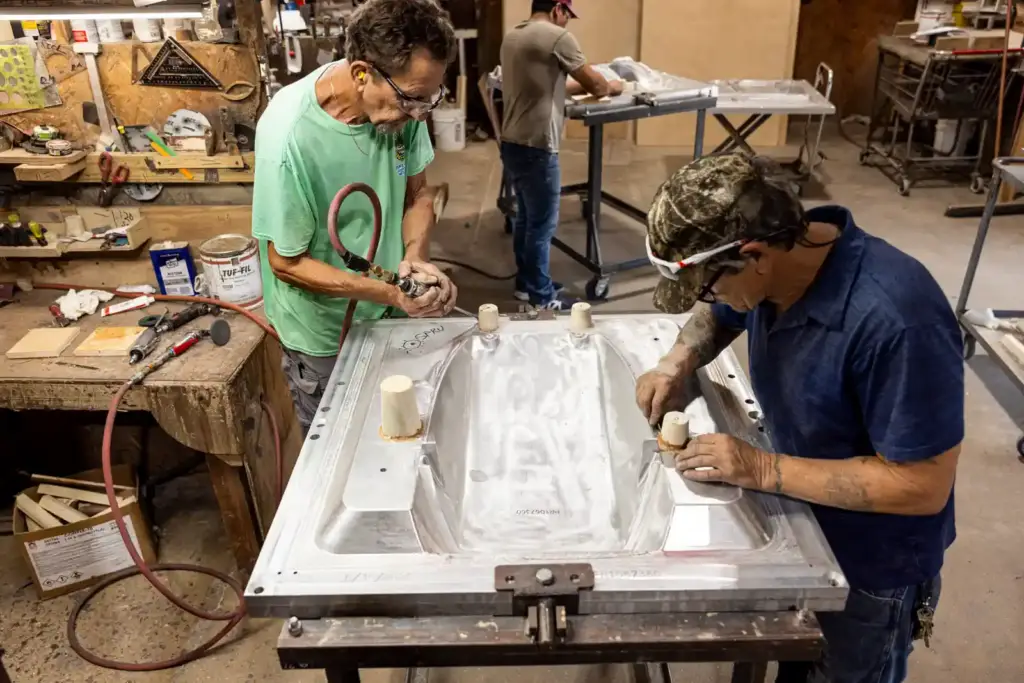
Tooling design begins with the casting model the customer and CPI agree on during the Design for Manufacturability (DFM) phase. A dedicated CPI engineer then develops the tooling around that approved design, including the pattern, core boxes, gating and runner systems, sprue locations, and other features needed for repeatable production. Flow and solidification simulation helps us evaluate filling and feeding before we finalize the tooling.
Throughout development, the design moves through technical reviews involving our Director of Engineering, Director of Foundry Sciences, project engineer, and pattern shop team. We review tooling, cores, gating, feeding, and other critical decisions from both engineering and foundry perspectives before moving forward.
With engineering, foundry sciences, our pattern shop, and CNC machining under one roof, the people designing the casting work directly with those building the tooling and producing the part. Using CAD/CAM, simulation, 3D printing, and multiple tooling methods, we can develop the tooling and manufacturing process together before the first production run.
Gating, Risering, and Core Design: Decisions No One Sees Until Something Goes Wrong
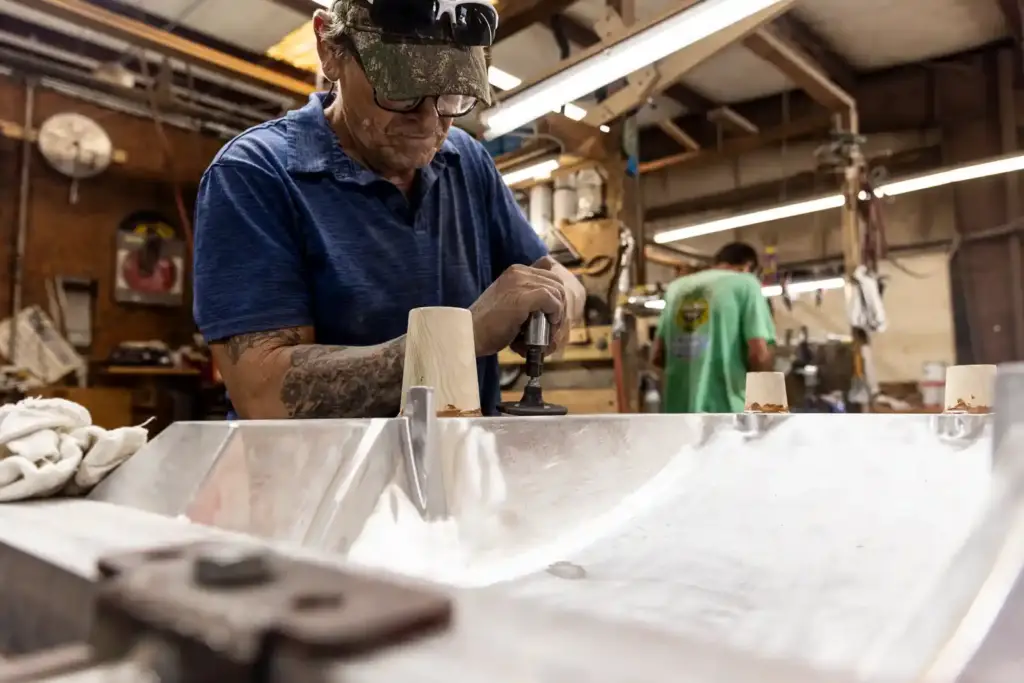
Gating and risering are critical to producing a sound aluminum casting. Gates control how molten metal enters and fills the mold, while risers provide feed metal as the casting solidifies. Poor design can contribute to turbulence, hot spots, shrinkage, and porosity.
Core design is equally important, creating internal geometry while maintaining proper strength, positioning, venting, and dimensional consistency.
At CPI, engineering and foundry teams consider gating, runners, sprues, risers, and cores early in the tooling design process. Flow and solidification simulation help evaluate filling, thermal behavior, and feeding before tooling is finalized. While the strategy is developed up front, many of the physical gates, runners, risers, and sprues are added later, after the primary pattern has been machined.
The goal is to fill and feed the mold properly, control solidification, and develop a repeatable process for producing sound castings run after run.
Pattern and Tooling Build: Why Keeping It In-House Changes Your Timeline
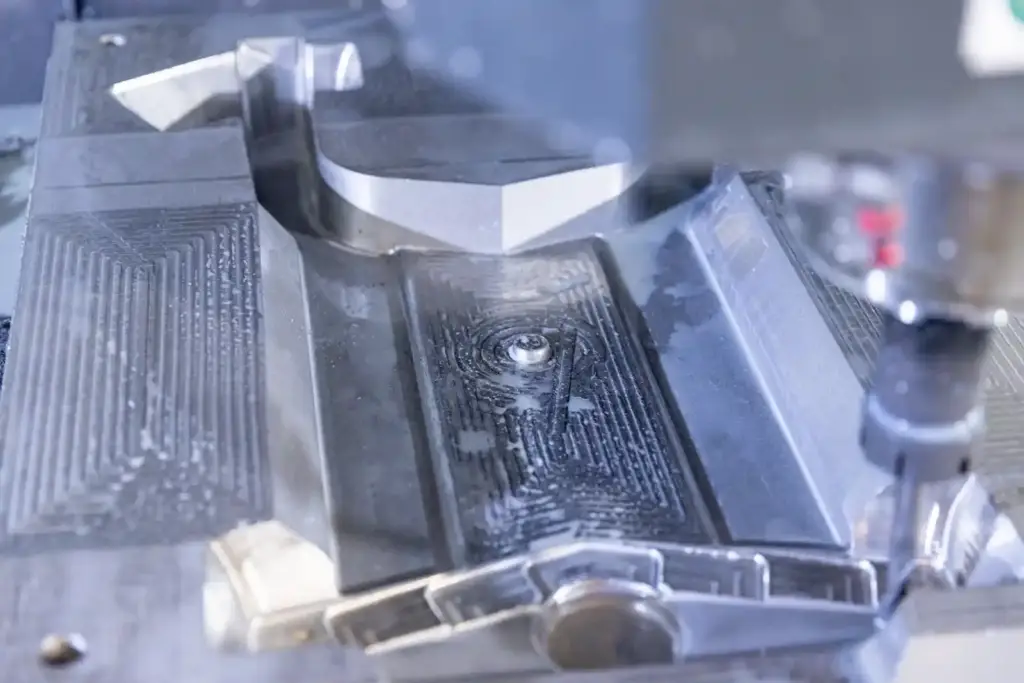
Once the casting and tooling designs are established, CPI takes the process from the digital model to finished production tooling in-house. Our engineers use the approved SolidWorks models to develop the machining strategy in SolidCAM, then use CPI’s proprietary process to CNC machine durable aluminum patterns and core boxes.
After machining, the pattern moves through final assembly, where gates, runners, risers, sprues, and other required components are added to complete the production tooling.
Keeping engineering, CAM programming, CNC machining, and our pattern shop under one roof also makes this process exceptionally fast. Once a design reaches this stage, CPI can typically complete production tooling in less than five weeks. For fully machined aluminum production tooling, that speed can be a game changer, allowing a new casting to move from an approved design to the foundry floor without months of tooling lead time.
Just as importantly, the same team that engineered the casting process builds the tooling, keeping design intent connected from the digital model through the first production mold.
First Article Trial Run: Molding Through Finishing
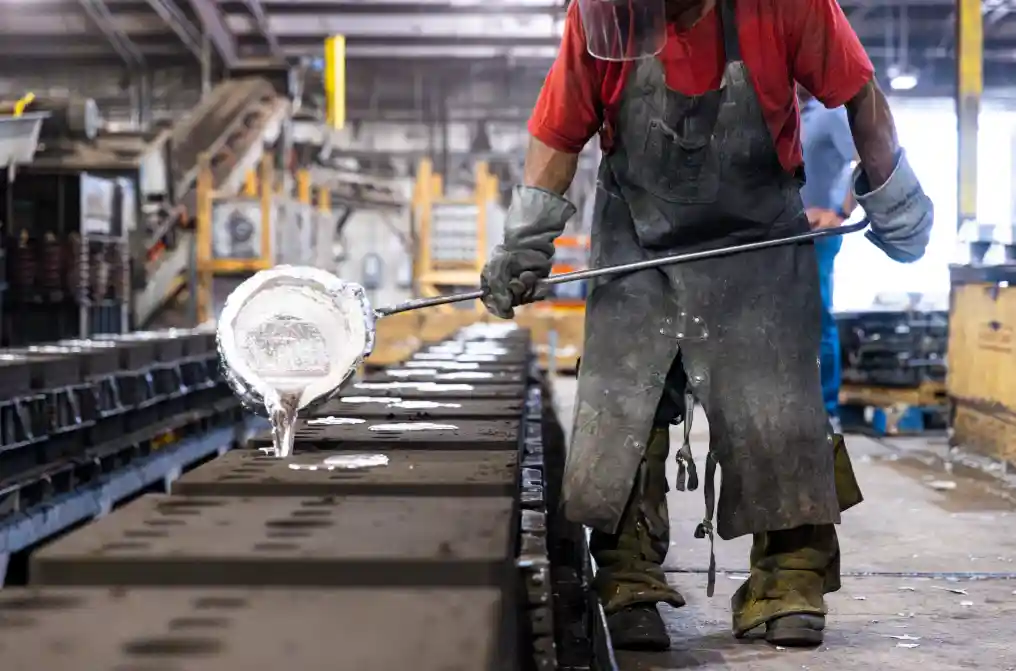
Before the first mold is made, CPI has already developed a job card defining the manufacturing route, from molding and core setting through pouring, shakeout, finishing, machining, and inspection, along with engineering notes and process requirements.
The tooling is set up on the intended production molding line, and the first article trial begins. Our engineering team and Director of Foundry Sciences are directly involved, evaluating mold and core performance, filling and feeding, pouring conditions, and the casting as it moves through finishing.
We then inspect the completed castings against customer requirements and the established process. We review and incorporate any necessary tooling, gating, feeding, or process adjustments back into the job card.
The objective is to prove and document a repeatable process before releasing the casting to production.
Finishing: From Shakeout to Finished Casting
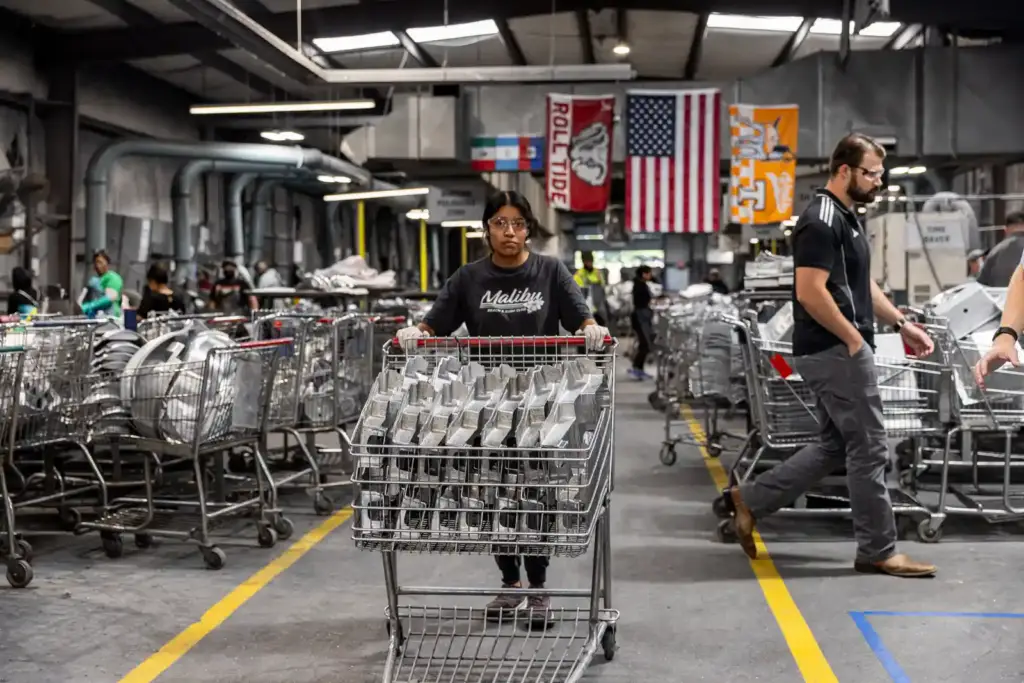
Finishing requirements are established during the DFM and quoting process based on part geometry, customer specifications, cosmetic requirements, and downstream operations.
After shakeout, the casting moves through specified finishing operations after gates, runners, risers, and flash are removed. CPI capabilities include shot blasting, vibratory finishing, polishing, grinding, orbital sanding, glass bead blasting, and powder coating.
During first article, engineering verifies that these established finishing processes produce the required surface condition and documents any final process details before production release.
CNC Machining: Finishing to Print
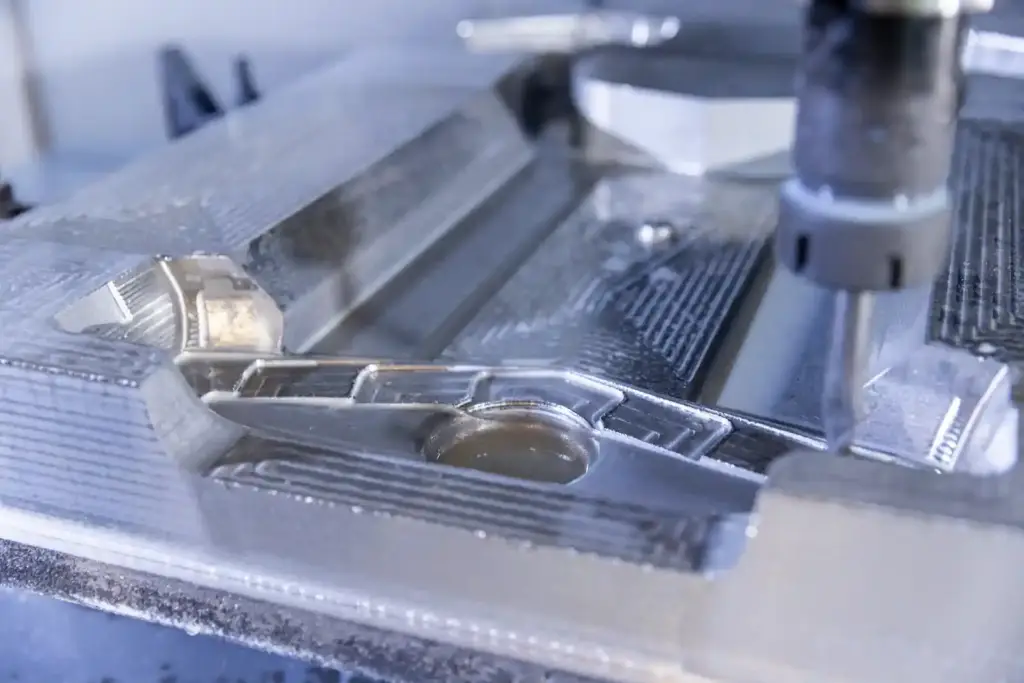
For castings requiring machined features or tighter dimensional tolerances, CPI can carry the part directly from the foundry into our in-house CNC machining operation. We consider machining requirements early in the development process, allowing our engineering team to account for machining stock, datum locations, fixturing, critical dimensions, and how the casting will ultimately be held and machined.
Once the casting process is established, our engineering and CNC teams develop the fixturing and machining strategy required to take the casting to the finished print. Because the casting, tooling, fixtures, and machining processes are developed under one roof, our teams can work directly with one another when adjustments are needed, whether that means refining a fixture, modifying machining stock, adjusting a casting feature, or improving the process for repeat production.
CPI operates nine CNC machining centers, including large-format equipment with a work envelope up to 64 × 40 × 30 inches. Keeping casting and machining together gives us control of the component from molten aluminum through the final machined part, with one team responsible for developing and maintaining the complete manufacturing process.
First Article Inspection: From Process to Print
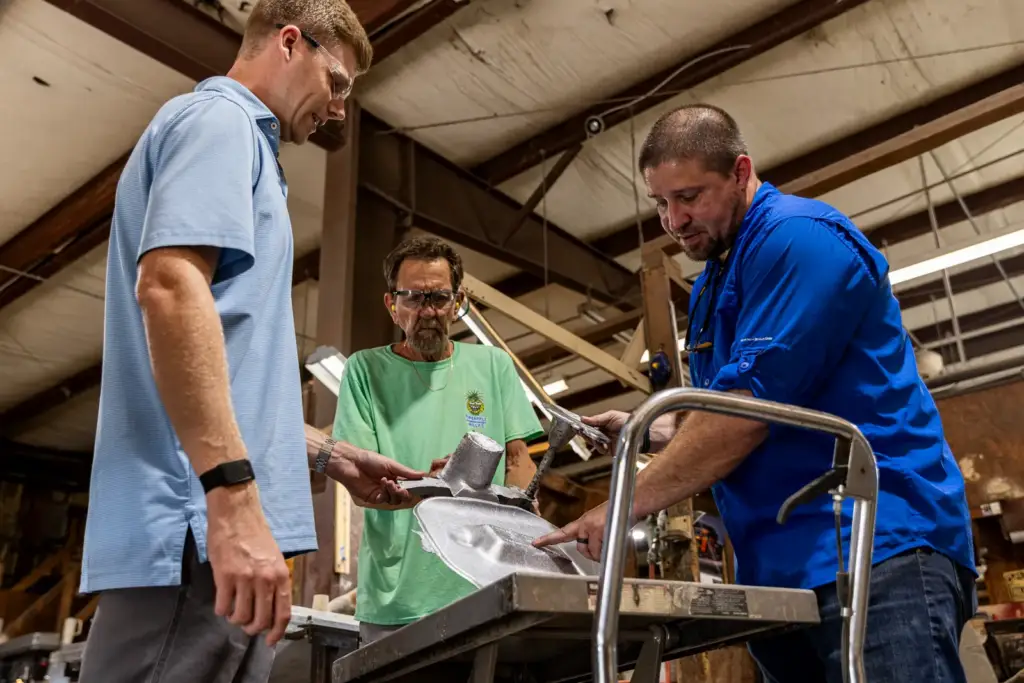
The first article process culminates in documented inspection and, when required, PPAP submission. Engineering and quality review sample castings against the approved 2D print, dimensions, tolerances, and customer-agreed requirements.
Parts are dimensionally inspected and documented, with attention to critical dimensions, designated quality-control areas, cosmetic requirements, and casting-related defects. This is where the engineering work completed throughout development is validated against the actual finished casting.
Engineering and quality review the results and document any required adjustments to tooling, cores, casting, finishing, fixturing, or machining. For PPAP programs, we compile dimensional results, inspection records, and supporting process documentation for customer approval.
The goal is to confirm a documented, repeatable process that can produce castings meeting the agreed-upon print and quality requirements before production release.
Complete Process Control, Under One Roof
At CPI, the advantage isn’t any single piece of equipment or individual process; it is having the entire casting development process working together under one roof. Engineering, foundry sciences, patternmaking, molding, finishing, CNC machining, and quality are all part of the same team and the same manufacturing process.
When a tooling change, casting concern, machining issue, or dimensional question arises, the people who designed the part can work directly with the people making and inspecting it. That communication lets what we learn at each stage feed back into the process, with engineering workflows and job documentation updated along the way.
CPI has been building aluminum castings since 1979, but we continue investing in the people, technology, equipment, and capacity behind this process. The goal remains the same: take a customer’s design, engineer a manufacturable casting around it, prove the process through first article, and build a repeatable production program capable of producing quality castings for years to come.
Ready to Launch Your Next Aluminum Casting Program?
Every successful casting starts well before the first mold is poured. From DFM and tooling design to simulation, patternmaking, molding, finishing, machining, inspection, and PPAP, each step builds on the last.
At CPI, those capabilities are under one roof and supported by the same engineering, foundry, tooling, machining, and quality teams from project start through production. The result is a documented, repeatable process built around producing the casting to the requirements agreed upon with the customer.
If you have a new aluminum casting project, or an existing part that needs a better manufacturing solution, talk to our team. Send us your 3D model, 2D print, annual volumes, and application requirements, and we’ll help determine the best path from design review through an approved first article and into production.